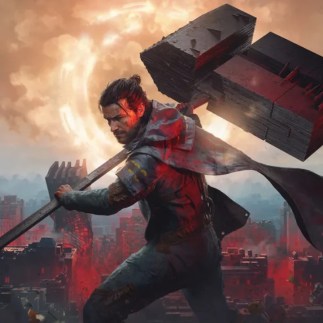
Insomniac Games has led the way in superhero video games for nearly a decade. With three incredible Spider-Man games under its belt, it has begun collecting Marvel IPs like the Infinity Stones. This week, Marvel’s Wolverine arrives, and it brings Logan into Earth-1048.
My truth is that I’ve been pretty excited at the thought of a new Wolverine game. It’s been a long time since we’ve seen the character star in his own game (X-Men Origins: Wolverine, anyone?). Now, Insomniac looks to do something a bit different, just like it did with its Spider-Man games that have since gone on to create an entirely new and deep universe, which is interesting enough to be fleshed out.
Marvel’s Wolverine Expands The Scope Of Earth-1048
Moving away from an open-world, Marvel’s Wolverine is a straight-up linear action game set before the existence of the X-Men. Some might find the decision not to start with Xavier’s School for Gifted Youngsters odd, but I like the idea that we’re experiencing a world where the X-Men don’t exist yet. In fact, not having them established yet helps players focus on Logan and his current struggles, as the sinister Nathaniel Essex, a stand-in for Professor Charles Xavier, leads him.

We meet Logan as he rejoins his teammates for a mission — the brutal savage Sabretooth and the shapeshifter Mystique, who form Team X. Together, Logan, Raven Darkhölme and Victor Creed are sent out on black ops missions worldwide to often save mutants from Bolivar Trask, a man with a vendetta against mutants who uses his resources and money to experiment and find a way to eradicate mutants from existence. By not sticking to the status quo, there’s so much more room to place the corresponding pieces of the established world in new ways.
However, once Jean Grey appears, the entire Team X takes a backseat, and we’re left to forget they exist until near the end. Insomniac Games once again recontextualizes much of the established canon from decades of X-Men lore by pulling Jean into Logan’s orbit while she’s overseeing a group of mutants on the run.
Their relationship then becomes an important plot of the 15-hour runtime it took me to roll credits. While I’m personally not as invested in how their romance unfolds, I understand purists will scoff at how they simp for each other. I also get it, especially if you’ve had a physical attraction to another person. And while we’ve yet to see how she’ll feel about Scott Summers, we know Jean grows to like Logan as they investigate a series of leads across Madripoor and Tokyo.

Logan is a hero haunted by the consequences of unleashing the beast within. His claws turn him into a living weapon, one forged against his will. With his adamantium claws, he dispatches enemies and uses her berserker rage to take on enemies on the battlefield. Before that, he lived in the wilderness as a feral beast. Essex took him in and helped restore his mind somewhat, then formed Team X to protect mutants and create a world where they could live openly.

Trask’s goals include kidnapping mutants to experiment on them, which is what leads Wolverine to discover a group of mutant children being taken by Omega Red and the Reavers to a dark site where Trask can study mutants before disposing of them. The situation doesn’t sit well with Team X, and it leads Wolverine to effectively destroy the site alongside his team while also engaging with Omega Red. What happens in the opening hours effectively catalyzes events throughout the 12-15 hour story. We see what both man and mutant will risk to further their agendas and how Wolverine responds to both sides when put in the middle of said conflict.

From here, we’ll take Logan on a worldwide adventure which takes us from the Canadian Wilderness and British Columbia to Madripoor, underground facilities, and Japan‘s Shinjuku district. Each location is packed with enemies, secrets, and reasons to fight them, while uncovering a plot that will change what it means to be a mutant. It’s all fine. I don’t have an issue with linear games like this one, and honestly, it’s worth mentioning, too.
However, while Wolverine’s story has some great moments, it won’t satisfy everyone. This game is effectively a new entry point into Insomniac’s Marvel universe, which means you’re not getting the same characters the comics have established. Events unfold differently if you’re comparing it to the comics, TV shows, or even films, and that means you’re seeing things in a new light. I like Liam McIntyre’s take on Logan, and he’s different from Hugh Jackman’s or Cal Dodd’s. Just like when he took over for Andy Whitfield in Spartacus, McIntyre embodies Logan with as much respect and love for the character as anyone else who’s played him.
He brings nuance and quietness to a role known for being a brutal savage. It’s honestly impressive how much he embodies the role and helps a new generation find their favourite version of this beloved character.
Similarly, I appreciate Insomniac trying something new by introducing Jean Grey into the universe and tying her into Wolverine’s mission. They work well together throughout the campaign, and by the end, there’s a ton of runway to introduce the broader strokes of the X-Men. If it wasn’t for how much I ended up enjoying the revised storybeats, Marvel’s Wolverine would’ve scored lower. I am not a comic purist, nor do I care about the love triangle between Logan, Jean, and Scott.

Here, we begin to see the official Sony template settle into its groove as a single-player narrative theme—it works, and people seem to enjoy these types of games. However, after nearly a decade of the same tentpole games, I can’t think of many differences between these experiences. Marvel’s Wolverine boils down to a safe bet from Insomniac Games and PlayStation, even though the story is one of the studio’s most brutal; it’s offset by gameplay and narrative beats you can find in many of Sony’s first-party titles.
Berserker Barrage
Wolverine is not your average fighter, and the sooner you remember he isn’t meant to air juggle enemies or be flashy in battle, the sooner you’ll enjoy yourself. I had spent the opening hours doing my best Dante impression, but Logan is not a son of Sparda. Instead, he’s a man with a dark past, and it’s led him to forget much of it. He also isn’t a bloodthirsty monster or someone who enjoys causing others pain. Instead, it is an unfortunate part of his gift and powers that leads him into bloody encounters, and it doesn’t always sit right with him.

Logan knows something very dark and angry is hiding inside him, and he uses it to survive. It often leads to blinding Rage, a mechanic that lets you push through Rage’s pain to deliver brutal, bloody terror to your enemies. Your toolkit grows as you play through the campaign, and that often leads to unlocking some very cool and Special Techniques like the Tornado Spin, which sees him spin repeatedly and annihilate enemies or the Spiral Strike, allowing him to spin and strike enemies.

You can equip four Special Techniques at once, each having its own cooldown period, and these are mapped to the L2 and face buttons. You’ll quickly learn what each of these excels at and how you can use them to make quick work of the enemies who are possibly dumb enough to face the Wolverine in battle.

It took about half the story’s runtime for the game to click for me. Up until then, I wasn’t feeling Marvel’s Wolverine, especially because I had just finished Onimusha: Way of the Sword. I was spoiled by how great it felt to play as Miyamoto Musashi, so leaving him behind and diving into the world of mutants and superpowers left me jarred and unimpressed by the lack of nuance in battle. I was ready to claim that Insomniac’s Spider-Man follow-up had no juice, but I was wrong.
Instead of playing it tight and methodically, Wolverine plays fast and loose. He’s able to take a ton of damage while dishing it out, and he’s more than capable of holding his own against a group of enemies. Once I stopped focusing on attempting to build combos and instead delivered destruction, I came away enjoying myself more than I did. It’s so much more fun being able to rip and tear into enemies in a raging fit of anger than quipping at enemies sometimes.

And because we’re dealing with mutants, Marvel’s Wolverine features DNA Adaptations. As you grow stronger, you can change Logan’s DNA. This might mean changing how his Rage works at each tier, like having your Special Techniques cool down faster, parrying enemy attacks to restore health, or finding secret caches more easily with improved hearing. A lot of the skills you can unlock have a good use case, but there’s something about crowd control skills that always take priority for me, which makes the most sense.

Verdict
Marvel’s Wolverine is a brutal, bloody return to Insomniac Games’ Marvel universe, and it does a great job of expanding the existing world and scope. Logan may be an undeniably difficult character to play in a video game; however, the developers elevated what it means to play as Wolverine by crafting a mature story that jettisons the established expectations of an X-Men game. For all the blood and violence the character finds himself surrounded by, it’s thanks to Liam McIntyre’s performance that you can see how much Wolverine cares for those around him and tries to do right by them despite being an ultimate weapon. Marvel’s Wolverine is easily Insomniac’s best narrative work, with excellent character work to match.
[The publisher provided a copy of the game for review purposes.]
Reviewed on: PlayStation 5