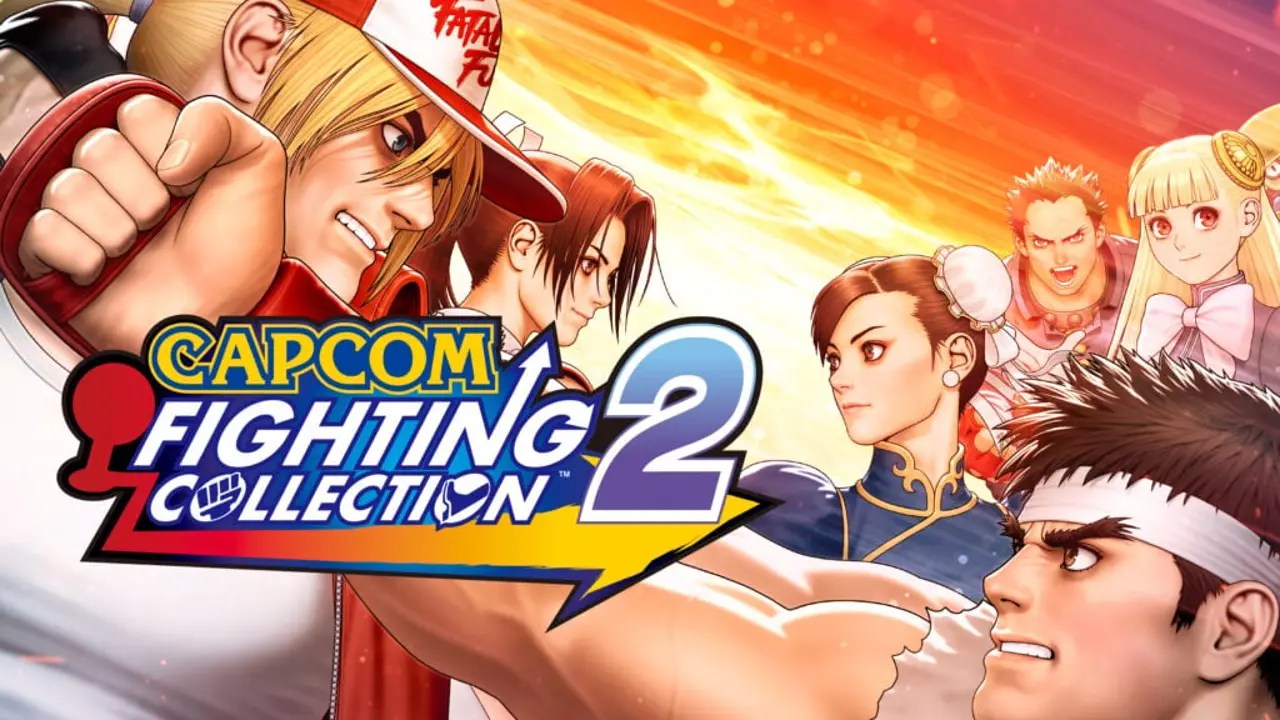
Capcom understands the desire and need to revive classics for a new generation. We’ve seen a few instances of this with the first collection of fighting games and Marvel vs. Capcom Fighting Collection: Arcade Classics, which launched last year. It was pretty exciting to finally have some of the most iconic fighting games from the ’90s available on modern hardware.
Now, Capcom is back with Capcom Fighting Collection 2, a follow-up that mixes some interesting 2D and 3D brawlers, like the Power Stone series, that I remember from my days at the local Playdium.
Capcom Fighting Collection 2 features eight titles, including Capcom vs. SNK: Millennium Fight 2000 Pro, Capcom vs. SNK 2: Mark of the Millennium 2001, Project Justice, Capcom Fighting Evolution, Street Fighter Alpha 3 Upper, Plasma Sword: Nightmare of Bilstein, Power Stone, and Power Stone 2.
I’ll be pretty upfront: several people I’ve spoken with regarding the collection are picking it up for Street Fighter and Power Stone. After spending the last few weeks with the collection, I found myself gravitating towards those games instinctively partly because while most of the games in the collection are good, the ones I’ve been playing are so damn great to begin with. I have a history with them, and it’s sometimes hard to pass up a nostalgia binge.
Capcom Fighting Collection 2 Is Slick
Capcom Fighting Collection 2 is impressive just by how accessible it is from the outset. With a sleek UI to boot, it is easier than ever to dive into the collection with the in-depth Training Mode, allowing you to understand each game’s mechanics and ins and outs. If you’re serious and want to master how Ryu or Ken work, the tools to learn their mechanics are available, and I’m impressed how easy it is to get into the swing of things to understand characters better.

A Game Difficulty option is also available in the Game Settings for single-player experiences, providing further support for players. Including one-button special moves as a customization option caters to newcomers and individuals who may find complex inputs challenging due to various circumstances. Frankly, these design elements contribute to the collection’s aim of reaching a broad audience. I can tell my casual fighting friends and know that there’s a solid base for them to learn against while learning the ropes.
While you’ve got some impressive titles like Capcom vs. SNK: Millennium Fight 2000 Pro and its sequel, Mark of the Millennium 2001, which I’m sure most people familiar with will flock first to. I remember these two games were pretty hype, were team-based, and more technical than the rest. If anything, these two games benefit from the included Training modes. Both games have stacked rosters, use a ratio system to change character strength levels, from one to four, and the sequel expands upon the system. The sequel, Capcom vs. SNK 2, introduces Grooves, C-Groove, A-Groove, S-Groove, N-Groove, P-Groove, and K-Groove, each representing how the specific companies work. If you decide to go with S-Groove, you’ll use The King of Fighters meter or the A-Groove, which is pulled from the Street Fighter Alpha series, allowing for much freedom when battling it out.

Street Fighter Alpha 3 Upper Is A Winner
You’ve also got Street Fighter Alpha 3 Upper, the first time it has launched with English support. It adds additional characters and balance changes, and while a lot of the changes were made under the hood, this is one of the best entries in the Alpha series. I remember how much I would lose it when a new game was announced, and would rent them for weeks as a kid. The roster is stacked, the fights are exquisite, and there’s this unique energy the Alpha games possess.

Comparatively, Power Stone and Power Stone 2 are my personal highlights of the collection. I’ve been eager to get more time with these games outside of an arcade, and neither is a traditional fighter. Released back to back in 1999 and 2000, the 3D brawler spun off into a show, and is set in the 19th century, where many are looking for a treasure to make their wishes come true. Players engage in one-on-one combat, using environmental objects as projectiles and collecting randomly spawning weapons. The goal is to obtain three Power Stones, which enhance abilities. Collecting all three allows for a temporary, powerful transformation with access to two special attacks. The first Power Stone is a bit more basic than its sequel, but both are a blast, with arenas often filled with chaos.
One of the outlier games in the collection is Plasma Sword: Nightmare of Bilstein. It’s a 3D fighting game from Capcom that plays like SoulCalibur. It looks nothing like any of the other games either and is the most sci-fi game here, and while it is fun, it’s also clunky. I like the Plasma Field mechanic, which surrounds your character in plasma and makes it more difficult for them to counter if it connects with your opponent or will make you grow in size or special moves.

Project Justice is a sequel to Rival Schools, and it’s one of the highlights of the entire collection. In three-on-three battles after school, you brawl it out and unleash Team-Up attacks and also Party-Up attacks to wreck opponents. The characters are all stereotypical characters found in anime, ranging from athletes to nerds to teachers.
The final game in the collection is Capcom Fighting Evolution, which launched two decades ago and, on paper, looks like a hit. However, it’s not nearly as fun as the other games are. It’s the one game I spent the least time with in the collection. It’s got a bad roster, it’s unbalanced, and its development history is a mark on an otherwise impressive roster of titles from Capcom. You can skip this, but check it out before benching it.
Each game in the collection uses rollback netcode for online matches and is far better. Typically, the issue with older games is that online play would often be spotty and a nightmare when playing with someone with a less-than-stellar connection. In Capcom Fighting Collection 2, my experience was nearly flawless as I attempted online across all eight titles.

The game features unlockable galleries that include a variety of artwork and design sheets, numerous music remixes, and Marquees representing each game. It also offers extended engagement achievements, including online and local multiplayer options. There are enough bonuses to keep fans engaged with the Museum and Marquees, which I feel more games need to deliver if they want to tell fans more of the behind-the-scenes details they most love to learn about.
Verdict
Capcom Fighting Collection 2 might not change much regarding its appearance, but it’s a solid collection of Capcom’s greatest fighter hits now readily available for genre fanatics. If Capcom Fighting Collection 2 and its predecessor are the template for these compilations, I want to see more land on consoles and PCs. Despite a couple of lesser titles included, the overall package offers a ton of entertainment and celebrates the genre with bangers like Capcom vs. SNK, Power Stone, and Street Fighter Alpha 3 Upper.

[The publisher provided a copy of the game for review purposes.]
Reviewed on: PlayStation 5